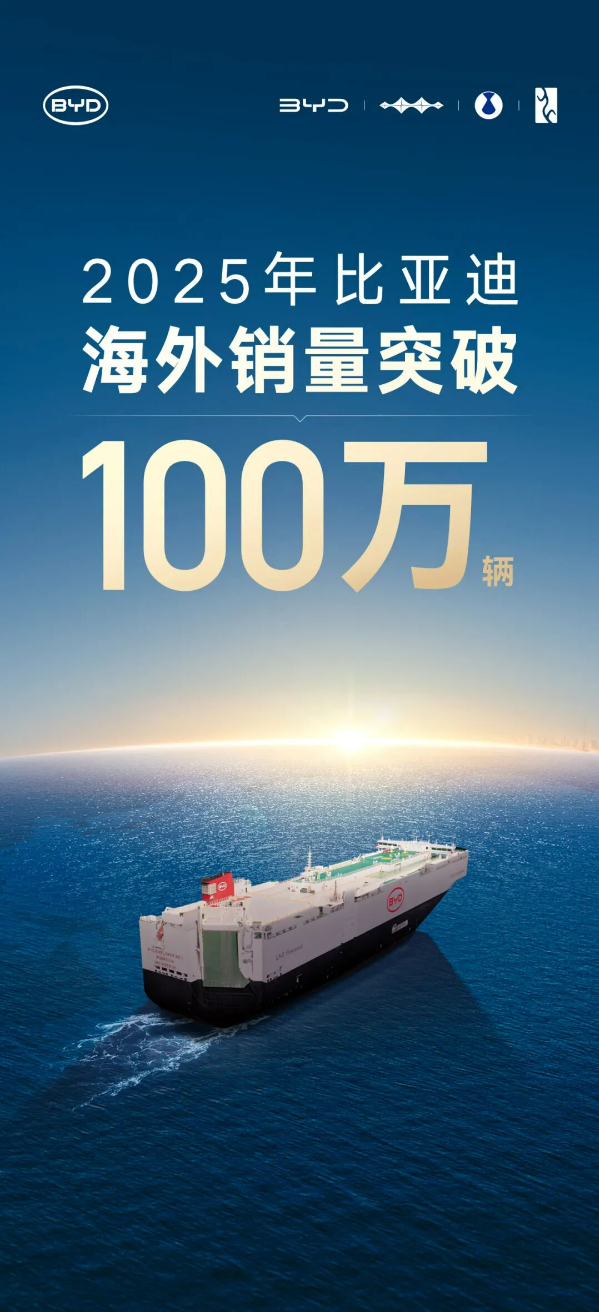
On January 1, 2026, BYD released its December and full-year sales data of 2025, reporting a total of 4,602,436 vehicles sold. Notably, overseas annual sales surpassed one million units for the first time—a 145% year-on-year increase—solidifying BYD’s position as the top-selling automaker in both China and the global market. Behind these impressive figures, key projects in the Shenshan Special Cooperation Zone—such as the BYD Auto Industrial Park in Shenshan and Xiaomo International Logistics Port—have emerged as prominent contributors to BYD’s strong performance.
In 2025, BYD witnessed a series of high-profile moments.
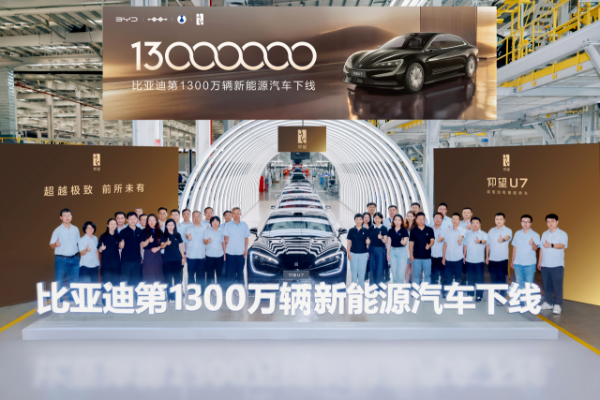
On July 21, BYD held a ceremony at its Shenshan industrial park to celebrate the rollout of its 13-millionth new energy vehicle (NEV), with the Yangwang U7 super flagship sedan equipped with battery, motor, electric control system, and electric suspension technology making its debut. On October 9, BYD’s 14-millionth NEV officially rolled off the production line at its passenger vehicle plant in Brazil.
On December 18, a brand-new Denza N8L slowly drove off the assembly line, marking the debut of BYD’s 15-millionth NEV. As the first automaker globally to reach this 15-million milestone, BYD is not only breaking its own records but also underscoring the steady and solid progress of Chinese NEV industry in the global automotive landscape.
As China reshapes the global NEV sector, Shenshan is rapidly emerging as the core of Shenzhen’s next-generation world-class auto production hub.
BYD’s plant in Shenshan boasts industry-leading automation, flexible production line organization, and advanced coating processes. Popular Shenshan-manufactured BYD models—the Han long-range edition, Fangchengbao (“Formula Leopard”) Ti 7, and Song Plus for export—are experiencing strong production performance and market demand. Exports in October exceeded 16,000 units, hitting a record high. BYD’s 9th, 10th, and 13th million NEVs were all produced here.
Among BYD’s eight national production plants, Shenshan stands out as the only major plant adjacent to a seaport. Finished vehicles need no long-haul transportation—they arrive at the port in less than 5 minutes, creating a “production-to-port” model that overcomes traditional logistical time and space limitations between factories and ports.
On September 26, 805 NEVs departed Xiaomo International Logistics Port for Morocco in Africa, officially inaugurating the “Xiaomo Port-Africa” roll-on/roll-off trade route. The Port now operates 11 automotive export routes covering seven major global markets: Southeast Asia, the Middle East, the Mediterranean region, Europe, South America, Australia, and Africa. To date, over 110,000 vehicles have been exported via the Port, which is rapidly establishing itself as a critical NEV export hub for south China.
share to: