From September 19 to 20, more than 20 domestic and international experts in the low-carbon field gathered in the Shenshan Special Cooperation Zone (referred to as “Shenshan”) to conduct research and exchange ideas on how to further advance green and low-carbon development as well as its education and outreach. They toured the Shenshan BYD Auto Industrial Park to learn about the production processes of new energy vehicles; visited CR Power Holdings Co., Ltd. to observe power generation operations and advanced technologies such as microalgae-based carbon sequestration; experienced firsthand the bustling industry-port integration at Xiaomo International Logistics Port; and went deep into Hongluo Village to explore She ethnic culture and green rural industries such as honey production.
Following their field research in Shenshan, the experts concluded that Shenshan’s innovative practices serve as a noteworthy model in addressing climate change and promoting biodiversity, thus meriting close attention.
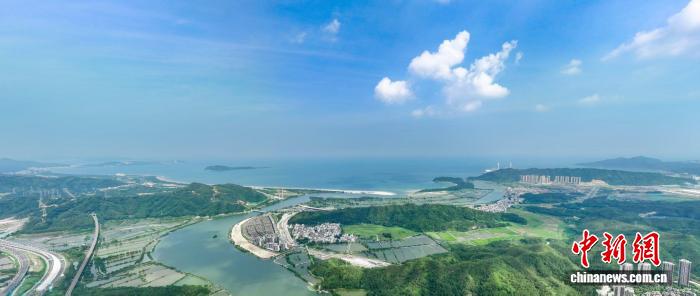
The estuary of the Chishi River in Shenshan Special Cooperation Zone. Photo courtesy of Shenshan Special Cooperation Zone
Formally established in February 2011, the Shenshan Special Cooperation Zone is China’s first special cooperation zone, pioneering a reform experiment that leverages enclave development to promote coordinated regional growth.
The Shenshan Special Cooperation Zone is now accelerating the development of the core hub for Shenzhen’s next-generation, world-class automotive manufacturing center. Advanced green and low-carbon technologies are enabling BYD to rapidly scale up the mass production and large-scale rollout of its mid- to high-end models, including the Yangwang U9, a million-yuan electric supercar famed for its dance, and the Ti 7 equipped with the latest intelligent driving features.
In Shenshan, vehicle assembly and key auto components manufacturing plants led by BYD have gone into operation. At the same time, tens-of-billion-yuan projects in new energy storage by companies such as GCL and Dynanonic have been successively launched, forging new drivers for green and sustainable growth. A full-chain layout for green manufacturing of auto components has taken shape, gradually attracting a large number of backbone and leading auto components enterprises, including BeijingWest Industries, Gecko Motors, Lear Dongshi Automotive Seating, Faurecia, GEM, and Qiantai Technology. As a result, a closed-loop green industrial chain for new energy vehicles, spanning vehicle manufacturing, auto components, and dismantling and recycling, is taking shape. L.K. Technology, a leading manufacturer of vehicle equipment, continues to enhance its innovation capabilities and has unveiled the world’s first 16,000-tonne super intelligent die-casting unit, boosting the high-end and green development of Shenshan’s casting industry.
The landing site for the Honghai Bay offshore wind power project has been confirmed to be located at Xiaomo, Shenshan. With a planned installed capacity of 2 million kilowatts in the first phase, the project is expected to supply 6 billion kilowatt-hours of high-quality green electricity annually upon completion.
Hon Stanley LI Sai-wing, a member of the 7th Legislative Council of the HKSAR and a committee chairman of a GBA carbon neutrality program, said the Shenshan Special Cooperation Zone is well-positioned for developing green industries such as new energy vehicles and integrated photovoltaic, charging and energy storage systems, and it has already achieved notable results in low-carbon and green development. This marked his third research visit to Shenshan. On this occasion, he specifically invited dozens of primary and secondary school students from Hong Kong to visit Shenshan, allowing them to experience firsthand the importance of low-carbon practices and environmental protection to production and everyday life.
The Shenshan Special Cooperation Zone is the only area in Shenzhen that includes rural communities. Its efforts in ecological and environmental governance started relatively late, with a foundation noticeably weaker than that of other areas. As large-scale development and construction accelerates, it has faced increasing pressure in ecological and environmental governance.
An official from Shenshan said that, in recent years, all assessment requirements for ecological civilization development have been completed, enhancing both the ecological landscape and the value derived from green development.
In recent years, Shenshan has maintained overall stability in ecological and environmental quality, with steady improvement. PM10, a key air quality indicator, has shown a continuous downward trend. Over the past three years, a total of 1,627 species of wild fauna and flora have been recorded across key areas of Shenshan. In March 2025, over 100 dolphins were spotted swimming together in the waters off Xiao, providing vivid evidence of improving marine ecology.
At the same time, Shenshan has advanced rural sewage treatment to a high standard. In 2023, the treatment rate of rural domestic sewage reached 100%, earning Shenshan an award from Guangdong province for its outstanding performance in rural domestic sewage treatment.
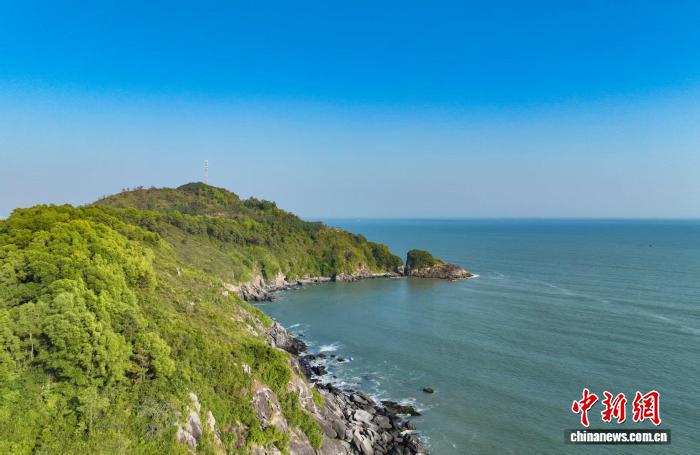
Bai’an Peninsula, Shenshan Special Cooperation Zone. Photo courtesy of Shenshan Special Cooperation Zone
It is worth noting that Shenshan has also been exploring approaches to rural pollution reduction and carbon mitigation, conducting surveys and assessments of ocean carbon sinks. For the first time, a comprehensive study was completed to estimate ocean carbon sinks across the coastal zone and 1,824.77 square kilometers of sea area under its jurisdiction. Shenzhen has also explored new pathways to fishery carbon sinks by performing surveys and simulations of removable carbon sinks.
A new vision of a livable and tourism-friendly pastoral city is gradually taking shape here. Hongluo Village and Bai’an Village were selected as part of the third batch of national demonstration villages for rural governance, while Da’an Village was chosen as one of China’s beautiful villages with revolutionary legacies.
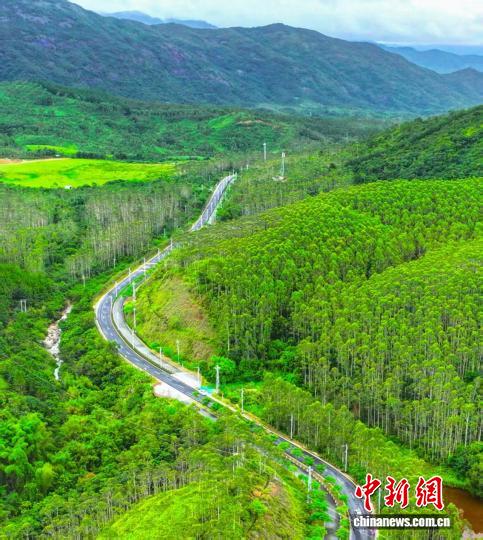
Shenshan Zhenmei Greenway. Photo courtesy of Shenshan Special Cooperation Zone
Hon Stanley LI Sai-wing observed that Shenshan could develop its modern health and wellness industry. He suggested that many R&D-related economic sectors could be introduced here, adding that the area would be well-suited as a demonstration area for the silver economy. He explained that research on wellness technologies and standardization could be implemented here, while Hong Kong-developed products could be brought to Shenshan for mass production and even expand into overseas markets in the future.
He plans to keep several hundred beehives in Hongluo Village, achieving a deep integration of green and environmental practices with the silver economy and wellness industry.
Jason Pitman, Regional Vice Chair of the International Union for Conservation of Nature (IUCN) Commission on Education and Communication, said that he found it impressive how Shenshan remains beautiful despite the scale of construction underway, with its environmental resources and biodiversity clearly visible. He suggested involving more community residents and young people to make the city more sustainable and resilient.
Hanying Li, Regional Vice Chair of the IUCN Commission on Education and Communication, said that Shenshan has three major strengths in advancing green and low-carbon development. She highlighted the region’s beautiful natural resource endowment and comprehensive biodiversity, its strategic positioning of natural resource protection as a developmental foundation with clearly defined red lines for safety and ecological conservation, and its convenient transportation infrastructure, particularly the forthcoming integration into Shenzhen’s half-hour high-speed rail network, which she noted would greatly benefit nature education endeavors.
Host: Party and Government Office of Shenshan Special Cooperation Zone
Technical Support Unit: Shenshan Special Cooperation Zone Smart City Construction Management Service Center
copyright © Shenshan Special Cooperation Zone All rights reserved